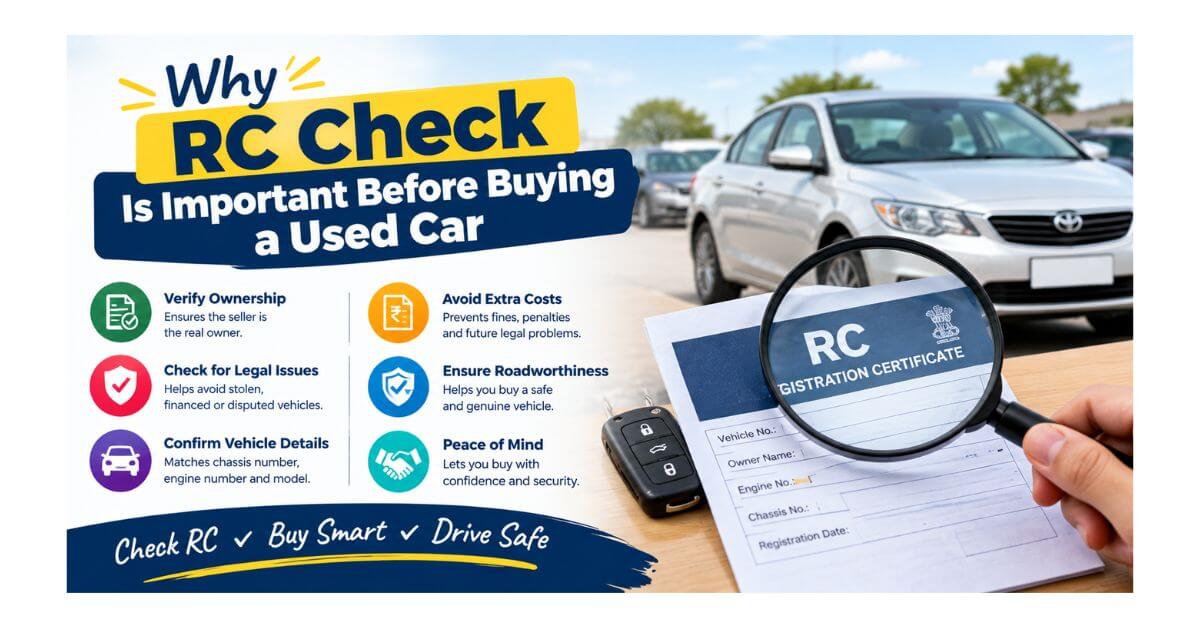
Why RC Check Is Important Before Buying a Used Car
Buying a used automobile can be a clever way to save money, but it also comes with dangers that are easy to overlook. An automobile may additionally appear clean, run smoothly, and appear to be an excellent bargain, but its paperwork should tell a very specific story. That is why an RC check is vital before buying a used car.
The Registration Certificate (RC) is one of the most important files linked to a vehicle. It helps you confirm key records such as the registration number, vehicle class, fuel type, registration date, ownership details, and other accessible information. Government car services such as VAHAN enable users to take a look at vehicle-related records online.
Before you pay the seller or signal the ultimate documents, taking a few minutes to test the RC can assist you identify mismatched information, unresolved finance-related records, expired documents, or other issues that can also complicate the purchase.
What Is a Registration Certificate (RC)?
The Registration Certificate, frequently known as the RC, is the official record related to a registered motor vehicle. It files necessary information about the vehicle and its registration.
Depending on the provider and information available, an RC or automobile report may additionally include important points such as:
- Vehicle registration number
- Registration date
- Vehicle class
- Fuel type
- Registering authority
- Vehicle status
- Hypothecation or finance status
- Insurance validity
- Pollution Under Control Certificate (PUCC) validity
- Other registration-related information
However, not all personal records are publicly displayed. Government data-sharing insurance policies specify that some proprietor records are masked when automobile data is accessed by individuals.
For this reason, an on-line RC take a look at have to be treated as an important verification step as an alternative than the solely check you function before buying a used car.
Check Also: Vehicle Owner Details – RTO Vehicle Information
Why RC Check Is Important Before Buying a Used Car:
1. Helps Verify the Registered Owner
One of the first things you take a look at is whether the man or woman selling the auto is connected to the registered ownership record.
If the seller’s information does not match the accessible registration records or supporting identification documents, do not rush into the deal. Ask the seller to explain the difference and furnish proper ownership documents.
A car can also have changed hands in the past, without the registration document being updated. Completing the appropriate possession transfer is essential because VAHAN offers a reliable Transfer of Ownership service for registered vehicles.
2. Helps Identify Vehicle Finance or Hypothecation
A used car may additionally still have a loan or finance association connected to it. The vehicle document can point out whether or not hypothecation is recorded.
This is in particular vital because you do not want to find out after shopping for the vehicle that there is an unresolved finance-related issue.
If hypothecation is shown, ask the seller for proof that the mortgage has been settled and that the required hypothecation termination manner has been completed. VAHAN provides an online provider for Hypothecation Termination.
3. Confirm Important Vehicle Details
The RC can assist you in evaluating the professional car file for the automobile you are without a doubt being offered.
Check small print such as:
- Registration number
- Vehicle class
- Fuel type
- Registration date
- Chassis details where available
- Other relevant vehicle information
If the information does not match what the seller has advised you, cease and investigate before making payment.
For example, a seller may describe an automobile as a non-public automobile whilst the registration record suggests a special automobile class. Such variations ought to by no means be ignored.
4. Helps Check Registration and Document Validity
Vehicle-related data can provide statistics about necessary validity periods, together with insurance plan and PUCC repute the place available.
The respectable Parivahan vehicle-status gadget affords tests for vehicle data alongside with insurance, PUCC, and pending challan status.
This can assist you become aware of records that may already have expired and need attention after the purchase.
5. Can Help Identify Outstanding Issues
An RC test is beneficial for spotting issues linked with the vehicle record, but it cannot be dealt with as an entire criminal or accident-history report.
For example, Parivahan offers vehicle-related records and pending challan checks, while different assessments may additionally be critical to set up the entire history of a used car.
Before buying, consider checking:
- Pending challans
- Insurance status
- PUCC status
- Tax-related information where available
- Finance or hypothecation status
- Registration status
Before moving further, get supporting documentation if something seems out of the ordinary.
How to Check RC Details Online:
For every fundamental verification, checking car information online can be far simpler than going to an RTO.
Option 1: Check Through the Official Parivahan Portal
The reliable VAHAN platform presents a “Know Your Vehicle Details” service. You can enter the automobile registration number and complete the required verification steps to get access to handy car information.
Official Parivahan / VAHAN Services
Certain information may be restricted or hidden for privacy purposes, depending on the service.
Option 2: Use mParivahan
The mParivahan carrier provides access to vehicle-related data and allows users to view on-hand registration and validity records digitally. Government statistics state that car registration, insurance plan, and other applicable validity details can be accessed through the platform.
For your personal vehicle, digital RC statistics can also be accessed thru supported authorities’ digital services.
Option 3: Use Other Vehicle-Information Services Carefully
Some third-party platforms make car facts simpler to view, but they need to not exchange authentic verification.
If you use a third-party service, examine vital statistics against the official Parivahan/VAHAN document before completing the purchase.
What to Check on an RC Before Buying a Used Car:
Once the vehicle information is available, review this checklist.
- Owner Details: Check whether the available registered-owner records are consistent with the seller’s documents. Remember that some proprietor records may also be masked online for privacy.
- Registration Number: Make certain the registration quantity proven in the information matches the range displayed on the vehicle.
- Engine and Chassis Numbers: Where applicable, verify the engine and chassis numbers with the automobile documents. Any unexplained mismatch must be handled as a serious warning sign.
- Vehicle Class and Fuel Type: Verify that the vehicle’s fuel type and classification correspond to what the seller has said.
- Registration Date: Check the unique registration date. This can help you confirm the vehicle’s age instead of relying solely on the seller’s description.
- Hypothecation Status: Check whether or not a financial institution or monetary organization is associated with the vehicle. If finance is recorded, ask for ideal loan-clearance and hypothecation termination documentation.
- Insurance and PUCC: Check accessible insurance plan and PUCC validity information. The respective vehicle-status system presents these checks for supported records.
Pending Challans:
Check whether there are pending visitor challans related to the vehicle. Do no longer expect that a used vehicle has an absolutely clean record virtually because it looks well maintained.
Red Flags You Should Never Ignore:
Extra care should be used when purchasing a used car when:
- The vendor refuses to show the authentic documents.
- The seller’s identity does not match the reachable ownership information.
- Vehicle details fluctuate between the auto and the RC.
- Hypothecation or finance statistics have not been cleared.
- The registration frame appears unusual.
- There are unexplained pending challans.
- The seller pressures you to pay immediately.
- The seller says forms can be completed “later.”
- The engine or chassis number no longer matches the documents.
- The seller cannot explain preceding ownership or registration changes.
Taking on someone else’s paperwork issues is not worth the low cost.
RC Check Alone Is Not Enough:
An RC check is an essential phase of used-car verification, but it should not be your sole inspection.
Before making the final payment, additionally think about checking:
- Insurance documents
- PUCC certificate
- Service history
- Loan-clearance documents
- Pending challans
- Tax or permit information where applicable
- Physical condition of the vehicle
- Engine and transmission condition
- Tyres and brakes
- Accident or repair history
- Chassis and engine numbers
- Ownership-transfer paperwork
The RC tells you about the legit registration record, while a mechanical inspection can expose issues that bureaucracy cannot.
What to Do If the RC Details Do Not Match:
Do not skip discrepancies honestly because the vehicle appears good or the vendor gives a discount.
Ask the seller for a rationalization and supporting documentation. If the possession information, registration details, chassis information, finance status, or other important documents can’t be satisfactorily explained, it is safer to walk away.
For possession transfers, the reputable VAHAN machine provides a dedicated Transfer of Ownership process, which indicates that the registration transfer should be treated via the official, authentic method as an alternative to being treated as an informal settlement between buyer and seller.
Smart Tips for Buying a Used Car Safely:
A few easy practices can greatly increase the safety of the purchasing process:
- Check the RC before paying any advance.
- Verify the seller’s identity and supporting documents.
- Match the registration variety with the vehicle.
- Check the on-hand insurance, PUCC, and challan information.
- Investigate any hypothecation or finance record.
- Physically test the engine and chassis numbers.
- Get an independent mechanical inspection.
- Keep copies of the sale agreement and helping documents.
- Complete the possession transfer via the proper, legitimate process.
- Do not let the vendor stress you into skipping verification.
Why RC Verification Can Save You From Future Problems:
The biggest advantage of an RC test is simple: you analyze greater about the automobile before you grow to be responsible for it.
A used auto can appear best from the backyard whilst having unresolved paperwork, finance, registration, or compliance issues. Checking the legit car document gives you an opportunity to identify potential troubles earlier than cash.
It additionally gives you more desirable self-assurance when evaluating the seller’s claims with government-held vehicle information.
Conclusion:
Buying a used auto can be a brilliant economic decision; however, only when you verify what you are buying. The RC is more than simply a piece of paperwork; it connects the automobile to its reputable registration report and provides necessary facts that can help you make a safer purchase.
Before signing the deal, take a look at the registration details, possession data in hand to you, automobile specifications, hypothecation status, insurance, PUCC, and pending challans. Official platforms such as VAHAN and mParivahan make many car checks less difficult to perform online.
A few minutes of verification can keep you from weeks or months of useless paperwork and financial trouble. Never buy a used auto simply because it appears correct or the charge seems attractive. Check the RC first, verify the documents, look into the vehicle, and then make your decision.
Frequently Asked Questions:
What is an RC check before buying a used car?
An RC take a look at the vehicle’s Registration Certificate, verifying important points before buying it. It helps confirm necessary registration information related to the vehicle.
Why is an RC check important when buying a used car?
An RC check can assist you in confirming whether the car details supplied by the seller match the legit registration records. This can reduce the chance of buying a car with unsuitable or unresolved registration information.
Can an RC check help verify the vehicle owner?
It can assist in verifying registration records associated with the vehicle. However, the records displayed via online offerings might also be limited, and buyers must not expect that each and every non-public element will be publicly available.