Vehicle Scrappage Policy India: Rules, Benefits and How to Scrap (2026)
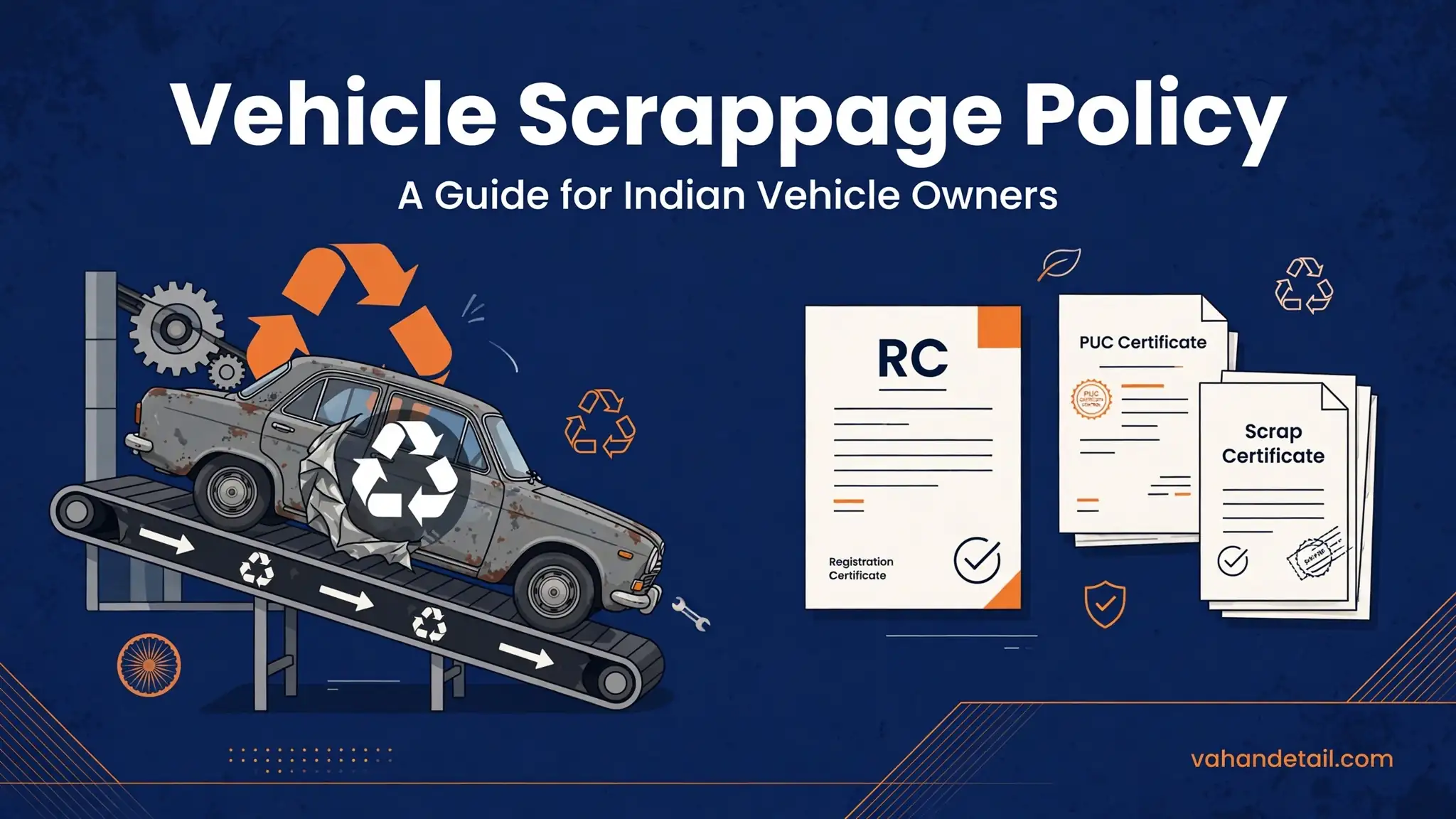
India’s vehicle scrappage policy lets owners of old, polluting vehicles scrap them at a registered facility and earn a Certificate of Deposit that unlocks discounts and tax rebates on a new vehicle. The policy is voluntary: no one is forced to scrap, but private vehicles older than 20 years and commercial vehicles older than 15 years must pass a stricter automated fitness test to stay on the road. If your old car keeps failing fitness, scrapping it under this policy is usually the smarter financial move.
Which Vehicles Come Under the Policy
The policy, formally the Voluntary Vehicle-Fleet Modernization Program announced in the Union Budget 2021-22, draws a clear line based on age and fitness:
- Private vehicles older than 20 years must undergo fitness testing at an Automated Testing Station (ATS). A vehicle that fails cannot be re-registered.
- Commercial vehicles older than 15 years face the same requirement, with the fitness test as the deciding factor.
- Any vehicle, of any age, that fails the fitness test or is declared a total loss can be scrapped.
- Vehicles impounded or abandoned, and those involved in certain offences, can also end up at scrapping facilities through enforcement channels.
The key point most owners miss: age alone does not force scrapping. A well-maintained 22-year-old car that passes the automated fitness test can legally keep running.
What Is a Registered Vehicle Scrapping Facility (RVSF)
Scrapping under the policy must happen at a Registered Vehicle Scrapping Facility, an RVSF licensed by the state government as per central guidelines. Only scrapping at an RVSF gives you the official benefits:
- The facility issues a Certificate of Deposit (CoD), the document that proves your vehicle was scrapped through the formal channel.
- The CoD is tradable in the sense that its benefits can be used when buying a new vehicle, usually by the same owner.
- The RTO cancels the vehicle’s registration (RC) once scrapping is complete, so the old vehicle’s identity cannot be misused.
- Hazardous materials (oils, batteries, airbags, refrigerants) are disposed of as per environmental norms, which roadside scrap dealers do not do.
Always verify that a facility is actually registered before handing over your vehicle. The state transport department website and the Parivahan Sewa portal are the official sources for this information.
Benefits of Scrapping: Discounts, Rebates and Waivers
The central guidelines promise a package of incentives for owners who scrap at an RVSF and buy a new vehicle against the Certificate of Deposit:
- Scrap value: the RVSF pays you the scrap value of the vehicle, guided at 4 to 6 percent of the ex-showroom price of a new vehicle in the same category.
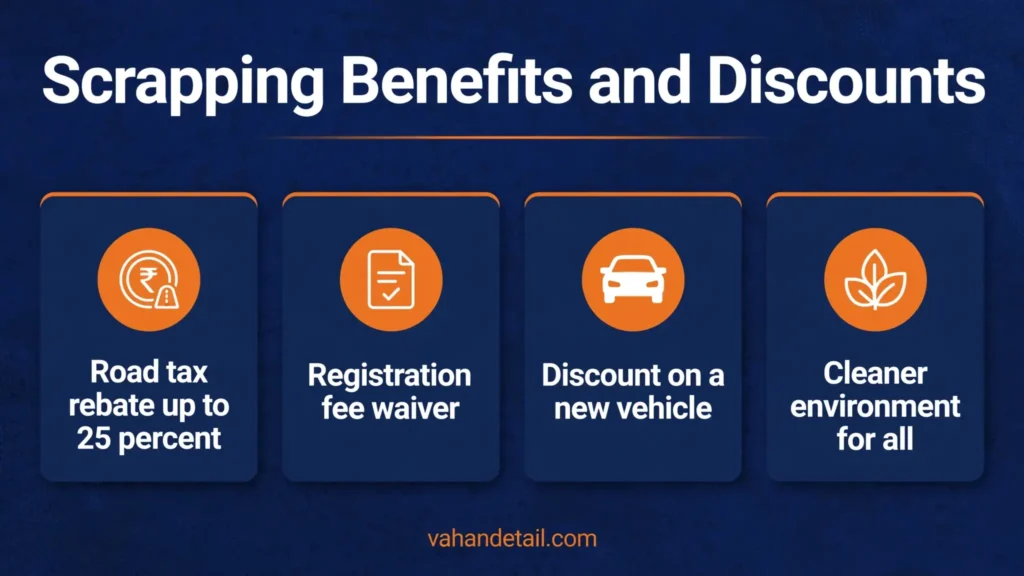
- Road-tax rebate: up to 25 percent rebate on road tax for non-transport (private) vehicles and up to 15 percent for transport (commercial) vehicles, when buying the new vehicle. States implement this through their own notifications, so confirm your state’s exact figure.
- Registration-fee waiver: waiver of the registration fee on the new vehicle purchased against the CoD.
- Manufacturer discount: vehicle manufacturers have been advised to offer around a 5 percent discount on new purchases against a CoD, though this is advisory and varies by brand.
Add these up and the effective benefit on a new car purchase can be substantial, which is exactly the policy’s intent: make replacing a polluting old vehicle cheaper than nursing it through repeated fitness tests. Note that the road-tax rebate and fee waiver depend on state government notifications, so the exact numbers can differ between states.
How to Scrap Your Old Vehicle: Step-by-Step Process
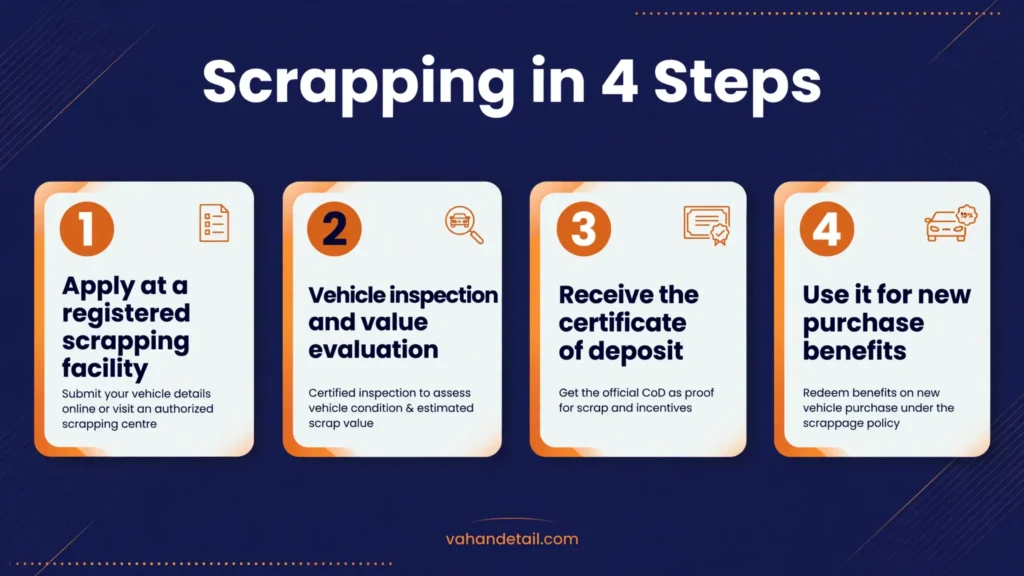
- Find a registered facility. Locate an RVSF near you through your state transport department’s website or the Parivahan Sewa portal.
- Get a quote. Share your vehicle’s details (make, model, year, condition) with the RVSF for a scrap-value estimate.
- Keep documents ready. You will need the Registration Certificate (RC), your ID and address proof, and the vehicle’s insurance and PUC records if available. If there is a loan on the vehicle, get the hypothecation cleared or a no-objection from the financier first.
- Hand over the vehicle. The RVSF inspects the vehicle and chassis/engine numbers, then takes custody.
- Collect the Certificate of Deposit. The facility issues the CoD in your name after scrapping.
- Get the RC cancelled. The RTO records the scrapping and cancels the registration, closing the vehicle’s record on the Vahan portal.
- Use the CoD on your new purchase. Present it at the dealership and the RTO to claim the scrap value payout, tax rebate, and fee waiver.
The whole process typically takes a few working days from handover to CoD issuance, depending on the facility’s queue.
A quick summary of the seven steps to scrap your old vehicle at a Registered Vehicle Scrapping Facility (RVSF).
Find a registered facility
Locate an RVSF near you through your state transport department’s website or the Parivahan Sewa portal.
Get a quote
Share your vehicle’s make, model, year and condition with the RVSF for a scrap-value estimate.
Keep documents ready
Gather the RC, your ID and address proof, plus insurance and PUC records; clear any loan hypothecation first.
Hand over the vehicle
The RVSF verifies the chassis and engine numbers, inspects the vehicle, then takes custody.
Collect the Certificate of Deposit
The facility issues the CoD in your name after scrapping is complete.
Get the RC cancelled
The RTO cancels the registration and closes the vehicle’s record on the Vahan portal.
Use the CoD on your new purchase
Present it at the dealership and the RTO to claim the payout, tax rebate and fee waiver.
Scrappage Policy vs the NCR Old-Vehicle Rules
This confuses many owners, so here is the distinction. The national scrappage policy is voluntary and applies across India: old vehicles face fitness tests, and scrapping earns benefits. The NCR has additional, stricter enforcement: diesel vehicles older than 10 years and petrol vehicles older than 15 years cannot ply in Delhi-NCR at all, regardless of fitness, under court and NGT orders. Our detailed coverage of the NCR old-vehicle crackdown explains the enforcement side. If your vehicle falls under the NCR ban, the scrappage policy is your clean exit: scrap it formally, take the CoD benefits, and put them toward the replacement.
Fitness Test or Scrap: How to Decide
Ask yourself three questions. First, can the vehicle realistically pass an automated fitness test (brakes, lights, emissions, steering, suspension are all checked objectively)? Second, what will repairs cost compared to the scrap benefits plus a new vehicle’s value? Third, how much green tax will you pay at the next renewal (older vehicles pay green tax at fitness renewal, covered in our green tax guide)? If the repair bill plus green tax exceeds a year or two of the vehicle’s remaining value, scrapping is the rational choice. Before deciding, you can check your vehicle’s current standing with a fitness certificate check and review the RC renewal process to see the full cost of keeping it legal.
Frequently Asked Questions
Is the vehicle scrappage policy mandatory in India?
No. It is voluntary. What is effectively mandatory is the fitness test for private vehicles older than 20 years and commercial vehicles older than 15 years. Only vehicles that fail fitness, or are declared unfit, must go off the road.
What is the Certificate of Deposit (CoD)?
The CoD is the official document issued by a Registered Vehicle Scrapping Facility after your vehicle is scrapped. It entitles you to the scrap value payout, road-tax rebate, registration-fee waiver, and any manufacturer discount on a new vehicle.
How much money do I get for scrapping my car?
The scrap value is guided at roughly 4 to 6 percent of the ex-showroom price of a new vehicle, plus the tax rebate (up to 25 percent of road tax for private vehicles), the registration-fee waiver, and any manufacturer discount. The exact total depends on your state and the new vehicle you buy.
Can I scrap a vehicle that still has a bank loan?
You must clear the hypothecation first or get the financier’s written no-objection. The RVSF and RTO will not process a vehicle with an active loan lien without it.
What happens to my RC after scrapping?
The RTO cancels the registration certificate once the RVSF reports the scrapping. The vehicle’s record is closed on the Vahan portal, so the RC cannot be misused later.
Does scrapping affect my insurance?
Inform your insurer after scrapping. You can claim a refund of the unused premium for the remaining policy period, and any No Claim Bonus can usually be transferred to your new vehicle’s policy.